
What You’ll Learn
- Foreclosure auctions are public sales tied to mortgage default, and the rules can vary by state and auction type.
- Many foreclosure auction properties are sold as-is, often with limited access, so your pre-bid research matters more than the opening bid.
- Payment requirements are auction-specific; many require “cash-like” funds and proof of funds before bidding.
- If a property is occupied, your time to possession can be longer, and tenant protections may apply in some situations.
What Is a Foreclosure Auction and Why Are Homes Sold This Way?
Buying a foreclosure at auction can feel like a lot at first — different rules, fast timelines, and not many chances to “sleep on it.” If you’re new to auctions, that’s normal. The goal of this section is to make the process feel more predictable, so you can decide if an auction purchase fits your comfort level.
A foreclosure auction is a public sale of a property started by a lender after the owner cannot repay the mortgage. The goal is to sell the property and recover what’s owed.
Here’s the part most buyers learn quickly: the process is not the same everywhere. Foreclosure rules differ by state, and those differences can affect notices, timelines, and what paperwork you receive after the sale.
Learn more about buying foreclosures and your state’s requirements.
For buyers, the big takeaway is simple: a foreclosure auction is not a typical “make an offer, schedule an inspection, close with a lender” transaction. Properties are often sold as-is and may have limited access before bidding. That means your decision has to be based on documents, what you can observe legally from the outside, and a budget that can handle some unknowns.
If you want a cleaner path (inspections, financing, and contract-based closing), consider whether other listing types may fit your needs better, such as bank-owned (REO) or private-seller pathways when available.
Is Buying a House at Auction a Good Idea for You?
It can be a good fit when your plan matches how auctions work — and a poor fit when it doesn’t.
A foreclosure auction can make sense if you:
- can follow strict registration and payment requirements (often cash-like funds)
- are comfortable buying as-is with limited access
- can do focused research up front (documents, title, budget)
- have a clear plan (rent, flip, live-in, or community rehab) and a realistic timeline
It may not make sense if you:
- need a full interior inspection before committing
- must rely on a long financing timeline
- can’t absorb holding costs if possession takes longer (especially if occupied)
A practical way to decide is to run a “stress test” on one property before you ever bid.
Four ways to stress test an auction property
- Estimate resale value or market rent from comparable properties.
- Assume repairs cost more than your best guess (add a contingency).
- Add holding costs you could face if the schedule changes or possession is delayed.
- Set a firm maximum bid and stick to it.
While foreclosures come with uncertainty, this stress test cuts through the noise. Use it to help filter out risk and focus on the opportunities that fit your budget and goals.
What Types of Auction Properties Should You Expect?
Foreclosure auctions run in more than one format and knowing which applies to a specific property changes how you prepare. In-person sales, fully online auctions and hybrid remote options each come with their own registration steps and day-of requirements, so the format is one of the first things to confirm when you find a property you want to bid on.
In-person foreclosure auctions
In-person auctions typically take place at a courthouse or another public location listed in the Notice of Sale. These auctions are open to the public. Depending on the venue and local rules, you may or may not need to register to bid, but you should expect to prove you have funds available.
Online auctions
Some auctions are conducted completely online. Online processes often require advance registration and steps like identity verification, so you’ll want to complete those requirements before auction day.
Remote Bid® and other hybrid options
Some tools, like Auction.com’s Remote Bid, allow buyers to bid remotely on select foreclosure properties. Remote access does not change the underlying rules: you still need to meet the auction’s local registration and payment requirements.
The Foreclosure Auction Process: A Step-by-Step Guide
This roadmap lays out the three main steps in the foreclosure auction journey — the framework you need to navigate the process and bid with confidence.
Step 1: Before You Bid: The Due Diligence Checklist That Protects Your Budget
Foreclosure auctions reward preparation. This is the work that can keep a “good price” from turning into a costly surprise.
Start with the Property Details Page documents.
Treat the property’s posted documents and transaction details as your starting hub, not a marketing flyer.
Practical tips:
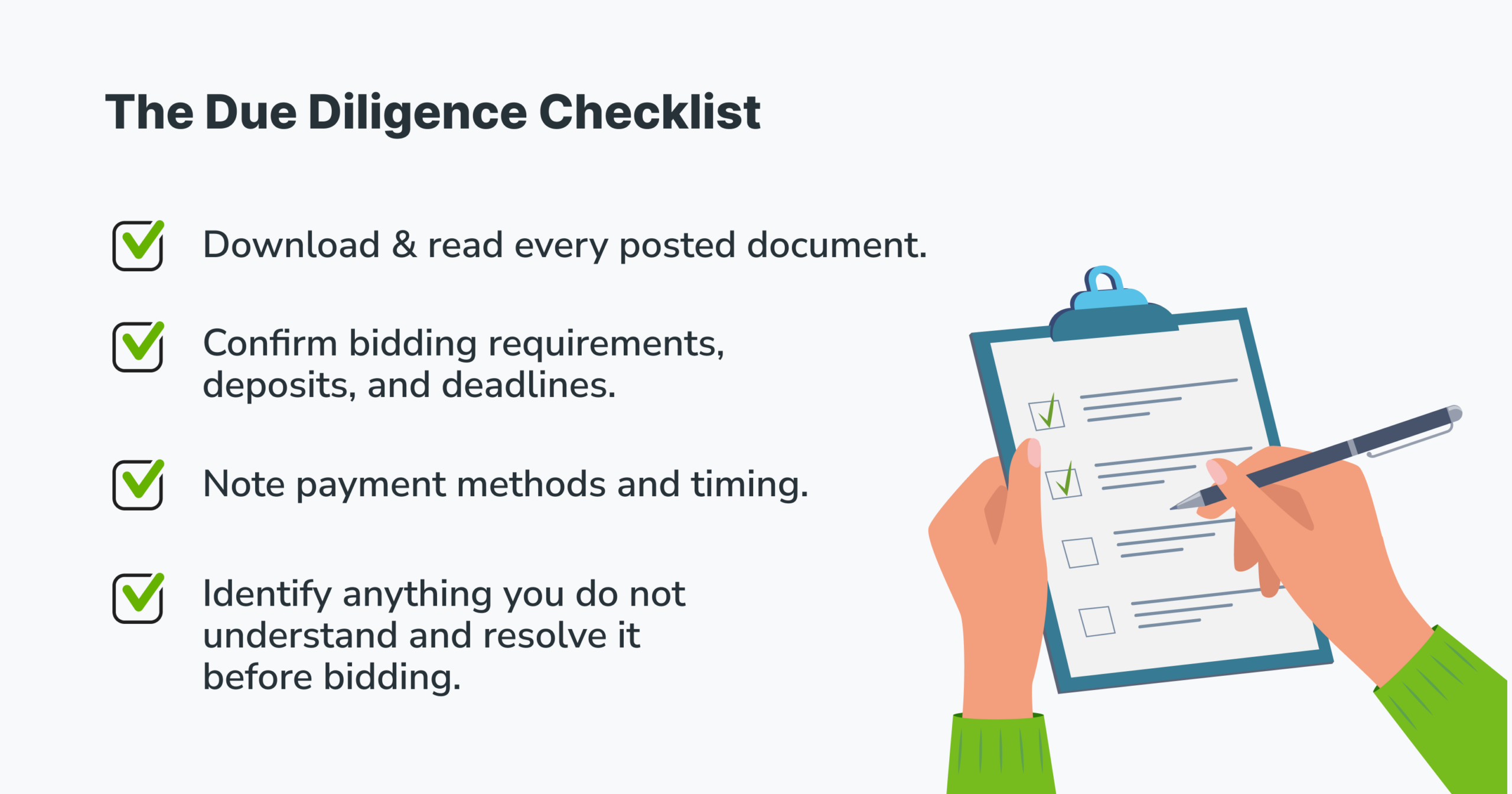
- Download and read every posted document.
- Confirm bidding requirements, deposits (if any) and deadlines.
- Note payment methods and timing (some sales require immediate or very fast payment).
- Identify anything you do not understand and resolve it before bidding.
If the listing includes reports or preliminary information, treat them as a starting point — not a substitute for your own evaluation.
Title search and “surviving obligations” reality check
Buying at foreclosure can come with title-related risk. Properties may have liens, back taxes, or other issues that may need to be resolved before you can take ownership.
A title search helps you identify recorded items that could affect cost or ownership. Some obligations (sometimes tax-related items, and perhaps HOA/condo-related obligations depending on priority and local rules) may survive a foreclosure sale, while other liens may be removed by the foreclosure process. Because this can vary by state and lien priority, do not guess — price the risk based on what you can verify and qualified local guidance if needed.
Estimate repairs without interior access.
Many foreclosure auction properties are sold as-is, and you may not know the interior condition until you legally take possession. That doesn’t mean you can’t estimate repairs — it means you estimate in a different way. Use what you can verify:
- Exterior drive-by from public areas: Check the roof condition, look for broken windows and obvious structural issues, and note any signs of vacancy.
- Comparable sales: cus on homes that are similar in size, age and location, then adjust for visible condition.
- Listing photos or third-party reports (if provided): Treat these as useful clues, not guarantees.
- Repair “unknowns” line item: Budget for systems you can’t confirm, including plumbing, electrical and HVAC.
Important: Do not trespass or disturb occupants. Keep your review to public streets and sidewalks.
If you’re an owner-occupant, be extra conservative: Your timeline to a safe, livable home matters more than a spreadsheet estimate.
Get your funds ready and confirm payment rules.
Many foreclosure auctions require payment in cash or cash-like forms (cashier’s checks, money orders, or other methods depending on the auction). Requirements can vary by state and local rules.
Payment timing can also vary. Some places require full payment immediately or the next business day. Others allow a deposit at auction and additional time to pay the remaining balance. The safe rule is to confirm the specific auction’s terms before you bid.
Clean pre-bid funds checklist
- Complete required registration steps early (especially online).
- Prepare proof of funds in the format required.
- Confirm whether you need full payment immediately, a deposit, or a short pay window.
- Keep a small buffer so you don’t lose a deal over a minor shortfall.
Step 2: Auction Day: How Bidding Usually Works
Auction day is where your preparation pays off. To keep your goals on track, it’s important to bid with your plan in mind rather than the momentum of the room.
Since competitive bidding and lender requirements can drive the final price above the opening bid, having a firm ‘walk-away’ number helps you stay focused on the right opportunity.
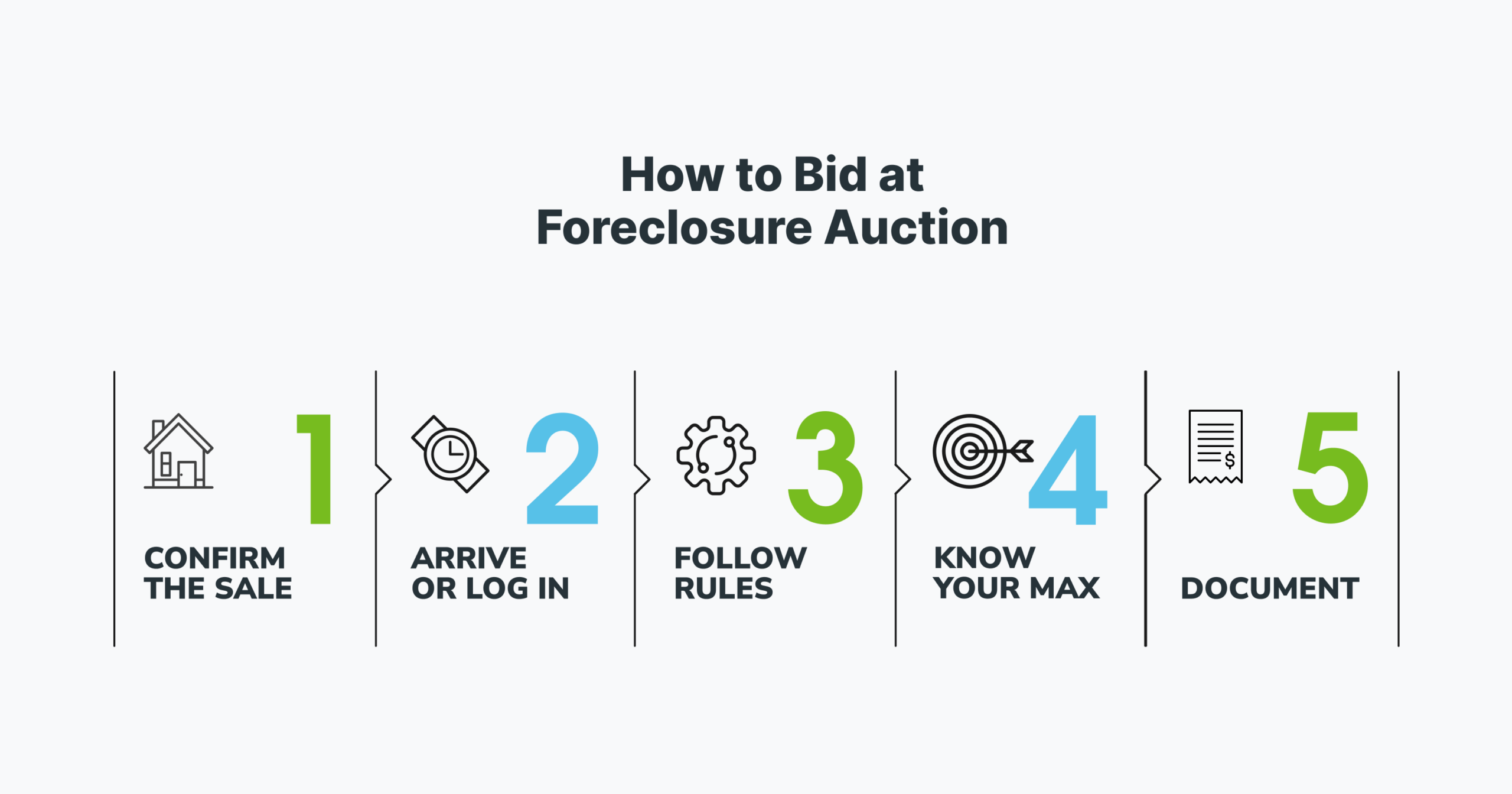
How to bid at foreclosure auction in 5 steps:
- Confirm the sale is still happening. Auctions can be postponed or canceled, sometimes even on the scheduled day.
- Arrive early (in-person) or log in early (online). Give yourself time to complete any check-in steps.
- Follow the auctioneer/platform rules. Don’t bid until you understand the terms being used for that sale.
- Bid only up to your maximum. Your maximum should already include repairs and a buffer for unknowns.
- Document what happens. Save receipts, confirmations, and any sale documents you receive.
Your best protection is discipline. If the price exceeds your limit, let it go and move to the next property.
Step 3: After You Win: Paperwork, Payment, and First-Week Priorities
Winning the auction is the start of the closeout process, not the finish line.
Depending on the sale and local requirements, you may be asked to complete documents confirming the sale and payment, and you may have strict deadlines.
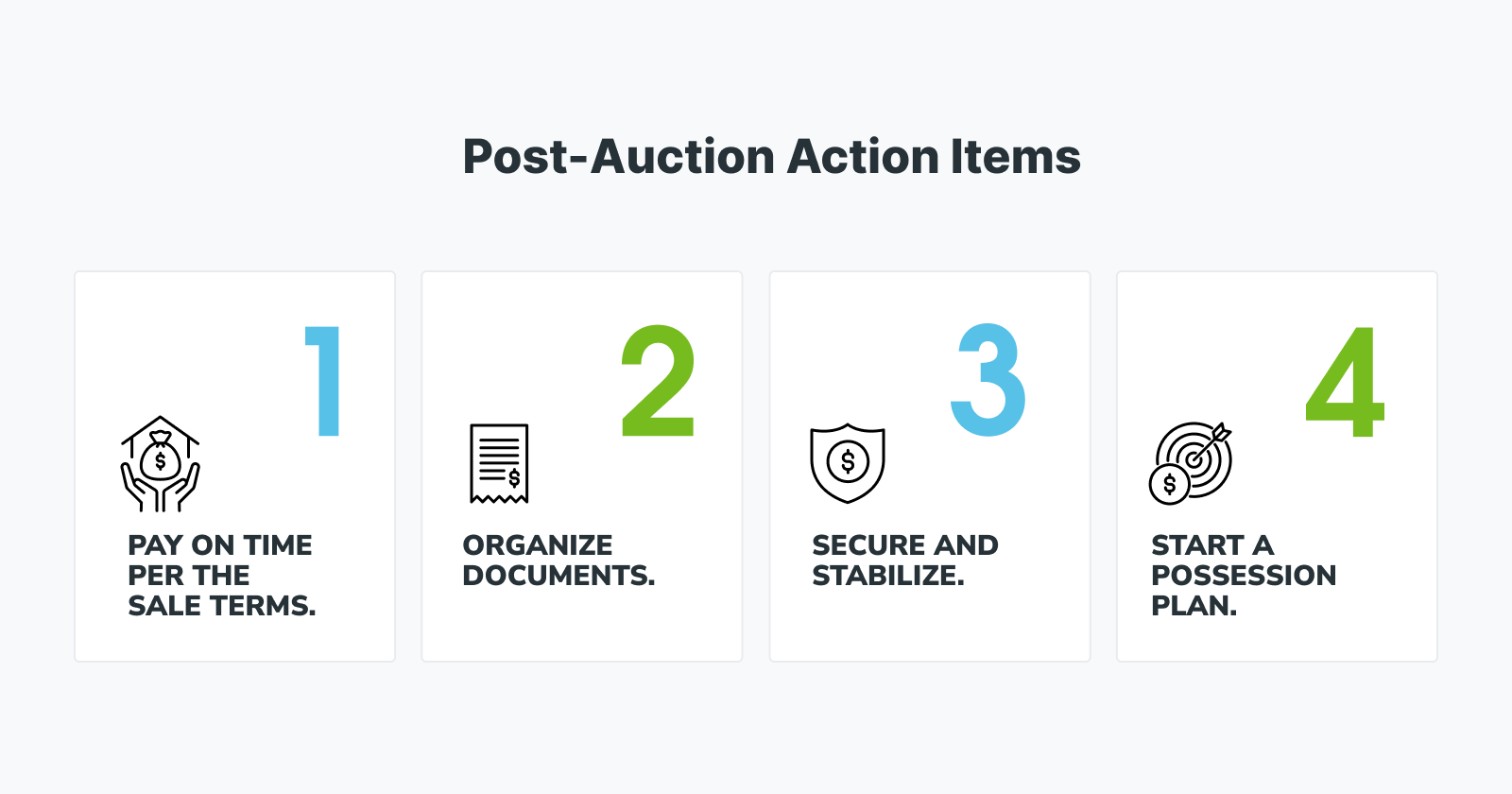
How to handle the first week after you win an auction:
- Pay on time per the sale terms. Missing deadlines can create serious problems under auction rules and could result in you losing out on the property.
- Organize documents. Keep a folder with every receipt, confirmation email, and recorded document you receive.
- Secure and stabilize (when you’re legally allowed). Prioritize safety hazards, water intrusion, and exposure issues first.
- Start a possession plan. If the property is occupied, assume your timeline is longer and budget accordingly.
Right of Redemption: What to Confirm Before You Invest More Money
In some states, a former owner may have a right of redemption that allows them to reclaim the property under state rules after a foreclosure sale. If a redemption period applies, it can affect:
- when you can safely invest in a major rehab
- your resale timeline
- your holding-cost assumptions
Because redemption rules are state-specific, the first step is to check the foreclosure statutes for the state where the property is located. State courts, attorney generals, and other official legal resources are the best places to confirm the rule. If there is no redemption period — or it is short — you can plan your rehab and resale timeline more confidently. If redemption applies and you cannot verify the details from a reliable local source, treat that uncertainty as a bidding risk and adjust accordingly.
If the home you’re watching is still occupied, your timeline can look very different than a vacant property. Who’s inside (tenant vs. former owner), local rules, and the auction terms can all affect what happens next—and what you should budget for. For the step-by-step playbook, read Buying an Occupied House at Auction. If you take one thing from this guide, make it this: auctions reward a repeatable process more than a “gut feel.” The best buyers don’t win because they get lucky—they win because they do the same basics every time: read the documents, confirm the rules for that specific sale, run a title search, budget repairs with a buffer, and set a maximum bid they won’t cross.
And if occupancy, redemption, or local requirements feel unclear, treat that as a signal to slow down and get reliable local guidance. A little extra work up front can save you time and money you can use toward your next foreclosure opportunity.
Explore our Foreclosure Home Properties Help Center to learn more.
Key Takeaways
- Foreclosure rules and timelines vary by state — treat each auction as its own playbook, and you’ll be ahead of most buyers in the room.
- Many foreclosure auction properties are sold as-is. Solid document review and a repair budget with a buffer turn that uncertainty into a manageable variable.
- Payment rules can be strict and move fast. Confirming proof-of-funds requirements and payment timing before you bid keeps you ready when the right property comes up.
- If a property is occupied, factor a longer possession timeline into your plan. Knowing this in advance helps you budget accurately and avoid surprises after you win.
